 English
  Español de México
Long-Term Blade Seal Performance in HVAC Systems
The Application: Sealing a Telecom HVAC Damper
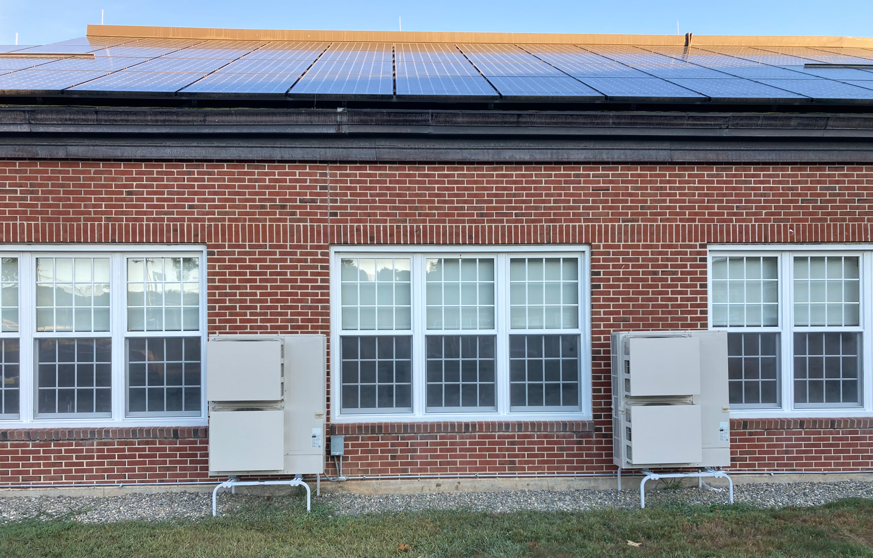
In telecommunications infrastructure, HVAC systems play a crucial role. Since server components are highly susceptible to potential damage from high environmental temperatures, HVAC systems are essential to keep server rooms cool and protected. In one real-world instance, a single wall-mounted unit was tasked with cooling a telecom installation, relying on a mechanical damper that opened and closed based on ambient temperature, bringing in cooler outside air when needed and sealing shut to block hot air when it’s not.
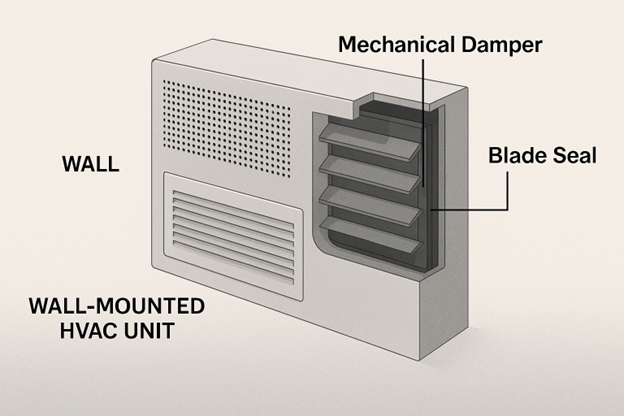
At the heart of this damper system was a critical foam seal: a blade insulator designed to maintain an airtight closure and prevent thermal leakage when the damper remained shut, sometimes for months at a time.
PSC Industries, a Rogers Preferred Converter, has been successfully supplying this part for over three decades.
The Engineering Challenge
For engineers designing HVAC systems in sensitive environments like telecom rooms, the seal integrity of the damper is top of mind. When the damper is closed, no air should leak through, regardless of whether it is sealed for days or months.
For the manufacturer of the HVAC unit the use of traditional foams like nitrile or PVC caused recurring issues:
- They tended to stick to themselves under pressure
- They tore or cracked during cycling
- They lost sealing force over time due to high compression set
With the damper closed for long stretches in a hot climate, material fatigue was a real risk. The HVAC manufacturer needed a material that could retain performance through long-term static compression, elevated temperatures, and repeated cycling, all without quality issues or rework.
Design Requirements
To ensure long-term HVAC reliability, the new material needed to:
- Maintain an airtight seal over time, even after months of closure
- Resist compression set at elevated temperatures
- Meet UL94 HBF flammability standards for safety compliance
- Deliver consistent compression force deflection (CFD) to ensure proper seal engagement
The Solution: PORON® 4701-40 material
PSC recommended Rogers PORON® 4701-40, a soft polyurethane foam engineered for long-term sealing performance. It provided:
✔ Exceptional compression set resistance, enabling it to rebound even after prolonged compression
✔ Predictable, consistent CFD to ensure sealing pressure is maintained
✔ Flame resistance (UL94 HBF rated)
✔ Reliable dimensional stability and tear resistance
Thanks to Rogers high-performance materials and PSC Industries’ converting expertise, the blade insulator was cut to precise tolerances and delivered ready for installation.
The PSC Difference
PSC has supplied this part continuously since the early 1980s. In that time, there has not been a single quality rejection.
That’s over 30 years of zero field failures in a critical HVAC sealing role!
What made this possible?
- Trusted material performance, validated by lab and field data
- Readily available technical documentation and CFD test results
- On-demand samples to support HVAC design iterations over the years
- Responsive support as specifications and compliance requirements evolved
The Result & Key Takeaway
The telecom HVAC system continues to perform reliably. By pairing Rogers’ materials with PSC’s converting precision and long-term partnership mindset, the HVAC manufacturer customer avoided design rework, field issues, and compliance risks.
This case demonstrates how thoughtful material selection and trusted converting can deliver reliability that spans decades, not just design cycles.
Want to learn more about our long-standing HVAC applications? You read about our proven HVAC capabilities here.